How Stories Teach Children to Think - Not Just to Listen
Storytelling is not entertainment. It is one of the most powerful cognitive tools we have for developing critical thinking in young minds.
The Curious Crew
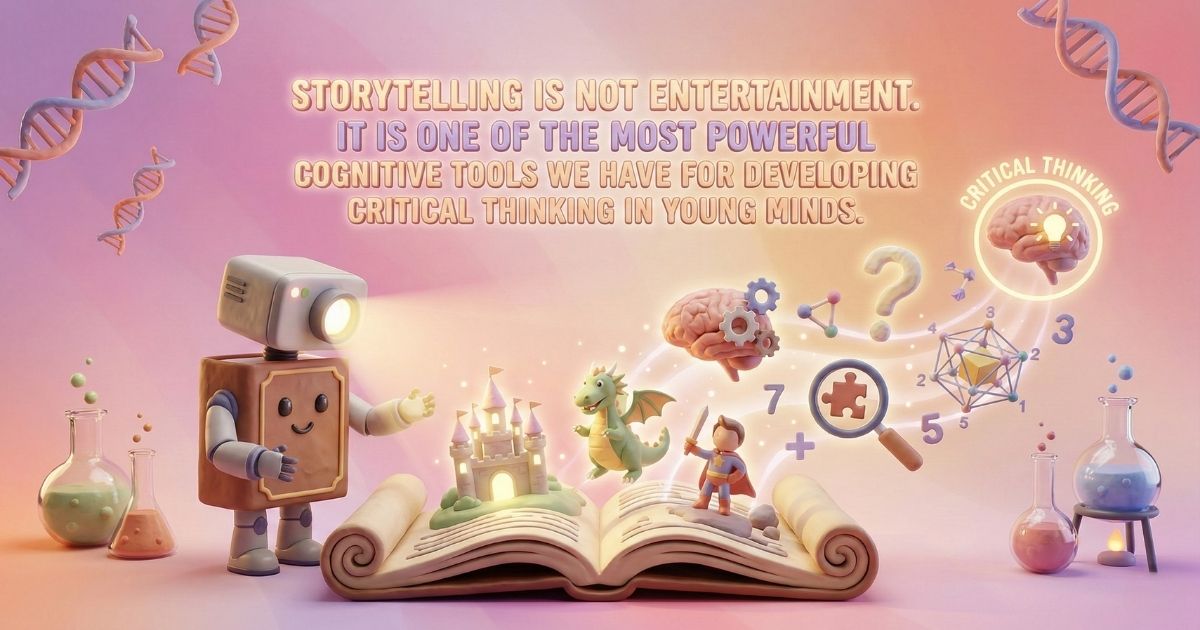
When we read a story to a child, something remarkable happens in their brain. Neural pathways light up not just in language processing areas, but in regions responsible for empathy, prediction, and abstract reasoning.
Beyond Entertainment
Stories are often dismissed as entertainment for children, something to fill time before "real learning" begins. This misunderstands the fundamental role narrative plays in human cognition.
Neuroscientists have demonstrated that stories activate the brain in ways that lists and facts simply cannot. When a child follows a character through a challenge, they are practising decision-making, perspective-taking, and causal reasoning. All in a safe, imaginative space.
The Curious Crew Approach
Our stories are designed with cognitive development in mind. Each narrative includes moments of deliberate ambiguity - places where children are invited to pause, reflect, and form their own interpretations before continuing. Learn more about how we create characters that ask the right questions.
We call these curiosity pauses: natural stopping points where adults and children can have genuine conversations about what might happen next, why a character made a certain choice, or what they would do differently.
Practical Tips for Story-Based Learning
- Ask open-ended questions during reading, not comprehension quizzes.
- Let children disagree with characters - it builds critical thinking.
- Revisit stories - children notice different things each time.
- Connect stories to real life - "Have you ever felt like that character?"
Stories Build Thinkers
The goal is not to create children who can recite plot summaries. The goal is to create children who can think about what a story means, question its assumptions, and carry those thinking habits into the real world. This is also why curiosity matters more than grades.